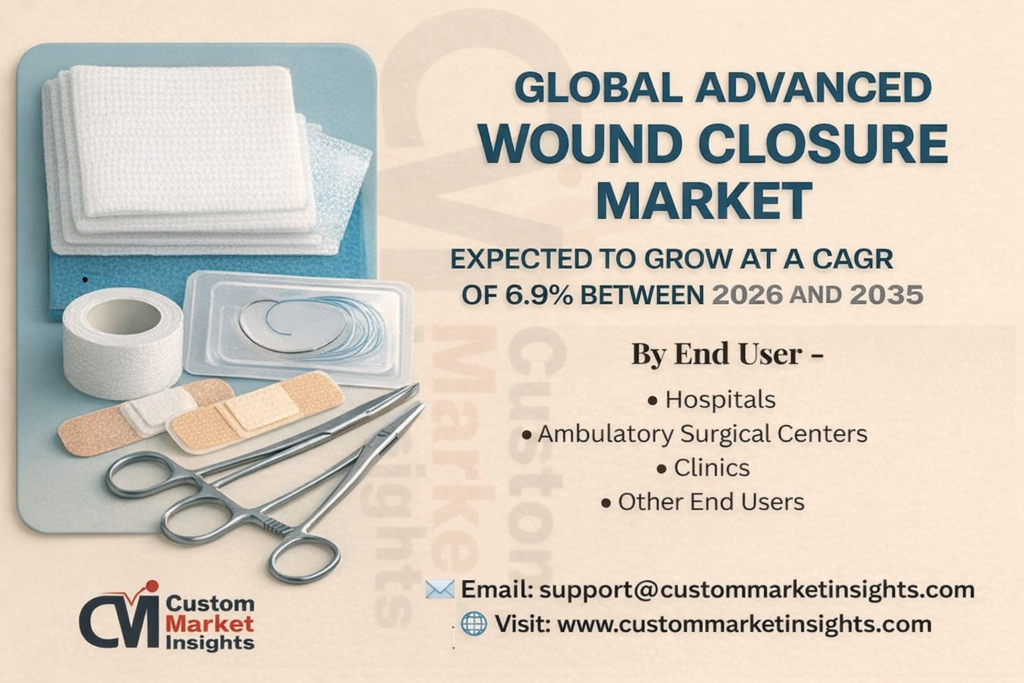
The global advanced wound closure market is witnessing steady growth, driven by increasing surgical procedures, technological innovations, and the rising burden of chronic diseases. It is estimated that the market size was USD 18.47 billion in 2025 and is projected to grow at a CAGR of 6.9% between 2026 and 2035. The market is expected to reach approximately USD 19.68 billion in 2026 and further expand to USD 32.54 billion by 2035.
The consistent growth of this market reflects the increasing demand for efficient wound management solutions, particularly in surgical settings. Advanced wound closure products are critical in ensuring faster healing, reducing infection risks, and improving patient outcomes.
Market Overview
Advanced wound closure solutions include a wide range of products such as sutures, surgical staplers, tissue adhesives, and hemostatic agents. These products are extensively used across multiple surgical disciplines to ensure proper wound sealing and minimize complications.
The growing emphasis on minimally invasive surgeries (MIS) has significantly boosted the demand for advanced wound closure technologies. Compared to traditional methods, these advanced solutions offer improved precision, reduced scarring, and shorter recovery times.
Additionally, the increasing awareness among healthcare providers regarding infection control and post-operative care has further accelerated the adoption of advanced wound closure products globally.
Key Market Drivers
1. Rising Prevalence of Chronic Diseases
The increasing incidence of chronic conditions such as diabetes, cardiovascular diseases, and obesity is a major factor driving the market. These conditions often require surgical interventions, thereby increasing the demand for effective wound closure solutions.
Chronic diseases also lead to delayed wound healing, necessitating advanced technologies that can promote faster recovery and reduce complications.
2. Growth in Surgical Procedures
The number of surgical procedures performed worldwide has increased significantly due to advancements in medical technology and improved access to healthcare services. From general surgeries to specialized procedures such as cardiovascular and orthopedic surgeries, the demand for wound closure products continues to rise.
Elective surgeries, cosmetic procedures, and emergency interventions all contribute to the growing need for reliable wound closure solutions.
3. Aging Population
The global geriatric population is expanding rapidly, leading to a higher prevalence of age-related health conditions that require surgical treatment. Older individuals often have slower healing rates and are more prone to complications, increasing the need for advanced wound closure products.
4. Technological Advancements
Innovations in wound closure technologies have significantly improved the efficiency and effectiveness of these products. Developments such as bio-absorbable sutures, advanced tissue adhesives, and powered surgical staplers have enhanced surgical outcomes.
Additionally, the integration of antimicrobial properties in wound closure materials helps reduce the risk of infections, further driving market growth.
5. Shift Toward Minimally Invasive Surgeries
Minimally invasive surgical techniques are becoming increasingly popular due to their benefits, including reduced trauma, shorter hospital stays, and quicker recovery times. These procedures require specialized wound closure solutions, creating significant opportunities for market expansion.
Market Segmentation
By Product Type
Sutures
Sutures remain one of the most widely used wound closure products. They are available in two main types:
- Absorbable Sutures: These dissolve naturally in the body and are commonly used in internal tissues.
- Non-absorbable Sutures: These require removal after healing and are used for external wounds.
Surgical Staplers
Surgical staplers are gaining popularity due to their speed and efficiency. They are categorized into:
- Manual Staplers
- Powered Staplers
Powered staplers offer improved precision and consistency, making them ideal for complex surgical procedures.
Tissue Adhesives
Tissue adhesives provide a non-invasive alternative to sutures and staples. They include:
- Natural Adhesives
- Synthetic Adhesives
These are particularly useful in cosmetic and pediatric surgeries due to minimal scarring.
Hemostatic Agents
Hemostatic agents are used to control bleeding during surgery. Key types include:
- Thrombin-based Agents
- Fibrin Sealants
- Collagen-based Agents
These agents enhance clot formation and improve surgical outcomes.
Mechanical Closure Devices
These include clips and other devices used for wound closure in specialized procedures.
By Application
The advanced wound closure market serves a wide range of surgical applications:
- Cardiovascular Surgery: Requires precise closure techniques to ensure patient safety.
- Orthopedic Surgery: Involves complex wound management due to bone and tissue involvement.
- General Surgery: Accounts for a significant share due to the high volume of procedures.
- Cosmetic Surgery: Focuses on minimizing scars and improving aesthetic outcomes.
- Gynecological Surgery: Increasing demand due to rising awareness of women’s health.
- Neurological Surgery: Requires high precision and advanced closure techniques.
- Ophthalmic Surgery: Involves delicate procedures requiring specialized products.
By End User
Hospitals
Hospitals dominate the market due to the high volume of surgical procedures and availability of advanced healthcare infrastructure.
Ambulatory Surgical Centers (ASCs)
ASCs are gaining popularity due to cost-effectiveness and shorter patient stays.
Clinics
Clinics contribute to market growth, particularly in minor surgical procedures and outpatient care.
Other End Users
Includes specialty centers and research institutions.
Regional Insights
North America
North America holds a significant share of the market, driven by advanced healthcare infrastructure, high healthcare expenditure, and the presence of major market players.
Europe
Europe is witnessing steady growth due to increasing adoption of advanced medical technologies and supportive government policies.
Asia-Pacific
Asia-Pacific is expected to grow at the fastest rate during the forecast period. Factors such as rising healthcare investments, growing population, and increasing awareness about advanced wound care are driving the market in this region.
Latin America and Middle East & Africa
These regions are experiencing gradual growth due to improving healthcare infrastructure and increasing access to medical services.
Competitive Landscape
The advanced wound closure market is highly competitive, with several key players focusing on innovation, strategic partnerships, and geographic expansion.
Key Players:
- Johnson & Johnson (Ethicon)
- Medtronic plc
- B. Braun Melsungen AG
- Smith & Nephew plc
- 3M Company
- Baxter International Inc.
- Integra LifeSciences Holdings Corporation
- Teleflex Incorporated
- Conmed Corporation
- Arthrex Inc.
- Stryker Corporation
- Becton Dickinson and Company
- Others
These companies are investing heavily in research and development to introduce advanced products that improve patient outcomes and enhance surgical efficiency.
Emerging Trends
1. Biodegradable and Bioactive Materials
The use of biodegradable materials in wound closure products is gaining traction. These materials reduce the need for removal procedures and promote natural healing.
2. Antimicrobial Coatings
Advanced wound closure products with antimicrobial properties help prevent infections, which is a critical factor in surgical success.
3. Robotic and AI-Assisted Surgeries
The integration of robotics and artificial intelligence in surgical procedures is driving the demand for precision-based wound closure solutions.
4. Increasing Focus on Cosmetic Outcomes
Patients are increasingly concerned about post-surgical scars, leading to higher demand for advanced closure techniques that offer better aesthetic results.
Challenges
Despite its growth potential, the market faces several challenges:
- High Cost of Advanced Products: May limit adoption in developing regions.
- Regulatory Hurdles: Strict approval processes can delay product launches.
- Risk of Complications: Improper use of closure devices can lead to infections or delayed healing.
Future Outlook
The future of the advanced wound closure market appears promising, with continuous advancements in medical technology and increasing demand for minimally invasive procedures. The integration of smart materials, AI-driven surgical tools, and personalized healthcare solutions is expected to revolutionize the market.
As healthcare systems worldwide focus on improving patient outcomes and reducing recovery times, the demand for advanced wound closure solutions will continue to grow steadily.
Conclusion
In conclusion, the global advanced wound closure market is set for consistent growth over the forecast period from 2026 to 2035. With a projected CAGR of 6.9%, the market will expand significantly, driven by the rising prevalence of chronic diseases, increasing surgical procedures, and technological innovations.
The shift toward minimally invasive surgeries and the growing emphasis on patient safety and comfort will further propel market growth. Companies that invest in innovation and adopt advanced technologies will be well-positioned to capitalize on the opportunities in this evolving market landscape.
