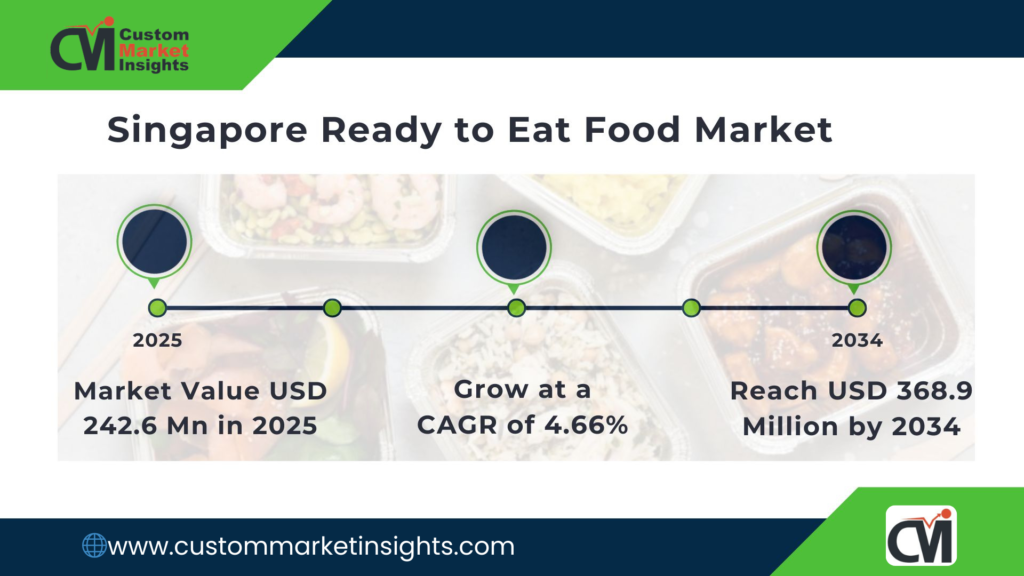
The Singapore ready-to-eat (RTE) food market is witnessing steady and sustained growth, supported by changing consumer lifestyles, urbanization, and increasing demand for convenience foods. According to CMI analysis, the market is projected to grow at a CAGR of 4.66% from 2026 to 2034, reaching approximately USD 368.9 million by 2034, up from USD 242.6 million in 2026.
Ready-to-eat food products, which require minimal or no preparation, are becoming increasingly popular among Singapore’s fast-paced urban population. With a strong culture of food consumption and a high proportion of working professionals, Singapore presents a favorable environment for the expansion of RTE food offerings.
Market Overview
Singapore is known for its dynamic food ecosystem, combining local culinary heritage with modern food innovations. The growing reliance on packaged and processed foods is driving demand for RTE products across multiple categories such as bakery items, instant meals, snacks, and meat products.
Consumers in Singapore are increasingly prioritizing convenience, quality, and nutritional value, which has led manufacturers to innovate and diversify their product portfolios. The availability of RTE foods across multiple retail channels—from supermarkets to online platforms—has further fueled market growth.
Market Drivers
Busy Urban Lifestyles
Singapore has one of the busiest urban populations globally, with long working hours and limited time for meal preparation. This has significantly boosted demand for convenient food options such as ready meals, instant noodles, and packaged snacks.
Increasing Workforce Participation
The rise in dual-income households and working professionals has contributed to the growing preference for quick meal solutions. Ready-to-eat foods offer a practical alternative to traditional cooking without compromising taste.
Expansion of Retail and E-commerce Channels
The rapid growth of modern retail formats and e-commerce platforms has enhanced the accessibility of RTE products. Online grocery shopping and food delivery services are playing a crucial role in driving sales.
Innovation in Food Processing and Packaging
Advancements in food preservation technologies, such as vacuum packaging and modified atmosphere packaging (MAP), have improved the shelf life and quality of RTE products, making them more appealing to consumers.
Market Restraints
Health Concerns
Despite convenience, RTE foods are often perceived as less healthy due to high sodium, preservatives, and artificial ingredients. Health-conscious consumers may limit their consumption of such products.
High Competition
The Singapore market is highly competitive, with numerous local and international players offering a wide range of products. This intensifies pricing pressures and reduces profit margins.
Regulatory Standards
Strict food safety regulations in Singapore require compliance with high-quality standards, which can increase operational costs for manufacturers.
Market Opportunities
Growth of Health-Oriented RTE Products
There is increasing demand for healthier ready-to-eat options, including organic, low-calorie, and plant-based foods. Companies focusing on clean-label and nutritious products can tap into this growing segment.
Premium and Gourmet Offerings
Singapore consumers are willing to pay for high-quality and gourmet food experiences. Premium RTE meals inspired by local and international cuisines are gaining popularity.
Sustainability and Eco-Friendly Packaging
Sustainable packaging solutions are becoming an important factor influencing purchasing decisions. Companies adopting eco-friendly practices can gain a competitive edge.
Market Segmentation
By Product Type
Bakery Products
Includes bread, cakes, pastries, and other baked goods. These products are widely consumed as quick breakfast or snack options. Bread remains a staple item, while premium pastries are gaining traction among younger consumers.
Ready Meals
This segment includes chilled, frozen, and canned meals. It is one of the fastest-growing segments due to its convenience and variety. Frozen meals, in particular, are gaining popularity due to longer shelf life.
Breakfast Cereals
Ready-to-eat cereals are widely consumed due to their convenience and perceived health benefits. The demand for high-fiber and protein-rich cereals is increasing.
Instant Snacks
Includes savory and sweet snacks such as chips, biscuits, and confectionery. This segment is driven by impulse buying and increasing snacking habits.
Meat Products
Processed meat products such as sausages, nuggets, and deli meats are widely consumed. Demand is driven by protein-rich diets and convenience.
Instant Noodles
A staple in Singapore households, instant noodles are popular due to affordability and ease of preparation. Premium and healthier variants are emerging in this segment.
Others
Includes ready-to-eat desserts, salads, and specialty foods catering to niche consumer preferences.
By Distribution Channel
Hypermarkets/Supermarkets
These remain the dominant distribution channel due to their wide product variety and competitive pricing. Consumers prefer supermarkets for bulk purchases.
Specialty Stores
Specialty stores cater to niche markets, offering premium and health-focused RTE products.
Convenience Stores
Convenience stores play a crucial role in urban areas, offering quick access to ready meals and snacks for on-the-go consumption.
Online Retail Stores
E-commerce is rapidly growing in Singapore, driven by digitalization and changing consumer behavior. Online platforms offer convenience, variety, and home delivery services.
Others
Includes vending machines, institutional sales, and direct-to-consumer channels.
Regional Insights
Singapore, being a city-state, does not have regional segmentation like larger countries. However, urban density and accessibility play a key role in market dynamics. High population density areas and business districts witness higher demand for ready-to-eat foods due to busy lifestyles.
Competitive Landscape
The Singapore ready-to-eat food market is highly competitive, characterized by the presence of numerous local and international players. Companies focus on product innovation, quality improvement, and strategic partnerships to strengthen their market position.
Leading Players
- Tee Yih Jia Food Manufacturing Pte Ltd
- SATS Food Solutions
- Hanwell Holdings Limited
- Thong Siek Food Industry Pte Ltd
- Tat Hui Foods Pte Ltd
- Tan Seng Kee Foods Pte Ltd
- Siang Heng Food Manufacturers Pte Ltd
- Lim Kee Food Manufacturing Pte Ltd
- Boon Tong Kee Food Processing Industry Pte Ltd
- Hock Lian Huat Foodstuff Industry Pte Ltd
- QAF Limited
- Seah’s Spices Food Industries Pte Ltd
- Prima Limited
- Yeo Hiap Seng Limited
- Chye Choon Foods Pte Ltd
- Others
These companies are leveraging strong distribution networks and brand recognition to maintain their competitive edge. Strategic initiatives such as mergers, acquisitions, and product launches are common in this market.
Key Trends
Rise of Plant-Based and Alternative Proteins
The demand for plant-based ready-to-eat products is growing, driven by health awareness and sustainability concerns.
Premiumization of RTE Products
Consumers are increasingly seeking high-quality, gourmet RTE meals that replicate restaurant-style experiences at home.
Digital Transformation in Retail
Online grocery platforms and food delivery apps are reshaping the distribution landscape, making RTE products more accessible.
Focus on Food Safety and Quality
Stringent regulations and consumer awareness are pushing companies to maintain high standards of food safety and quality.
Future Outlook
The Singapore ready-to-eat food market is expected to continue its steady growth trajectory over the forecast period. Factors such as technological advancements, changing dietary preferences, and increasing urbanization will drive market expansion.
Companies that focus on healthier formulations, innovative packaging, and premium offerings are likely to gain a competitive advantage. Additionally, the integration of digital technologies in supply chain and retail operations will further enhance market efficiency.
The Singapore ready-to-eat food market presents significant growth opportunities, driven by convenience, innovation, and evolving consumer preferences. While challenges such as health concerns and intense competition persist, the market’s future remains promising.
With continuous product innovation and strategic expansion, the RTE food industry in Singapore is set to play a crucial role in meeting the dietary needs of modern consumers, offering a balance of convenience, taste, and nutrition.
